Healthier, Safer,
Better-Looking Trees.
Proper pruning keeps your trees healthy, your property safe, and your landscape looking its best. We prune to ANSI A300 standards — the right cuts in the right places — never topping, never guessing. Serving River Falls and the St. Croix Valley.
- Pruned to ANSI A300 Standards
- Licensed & Fully Insured
- Free Estimates
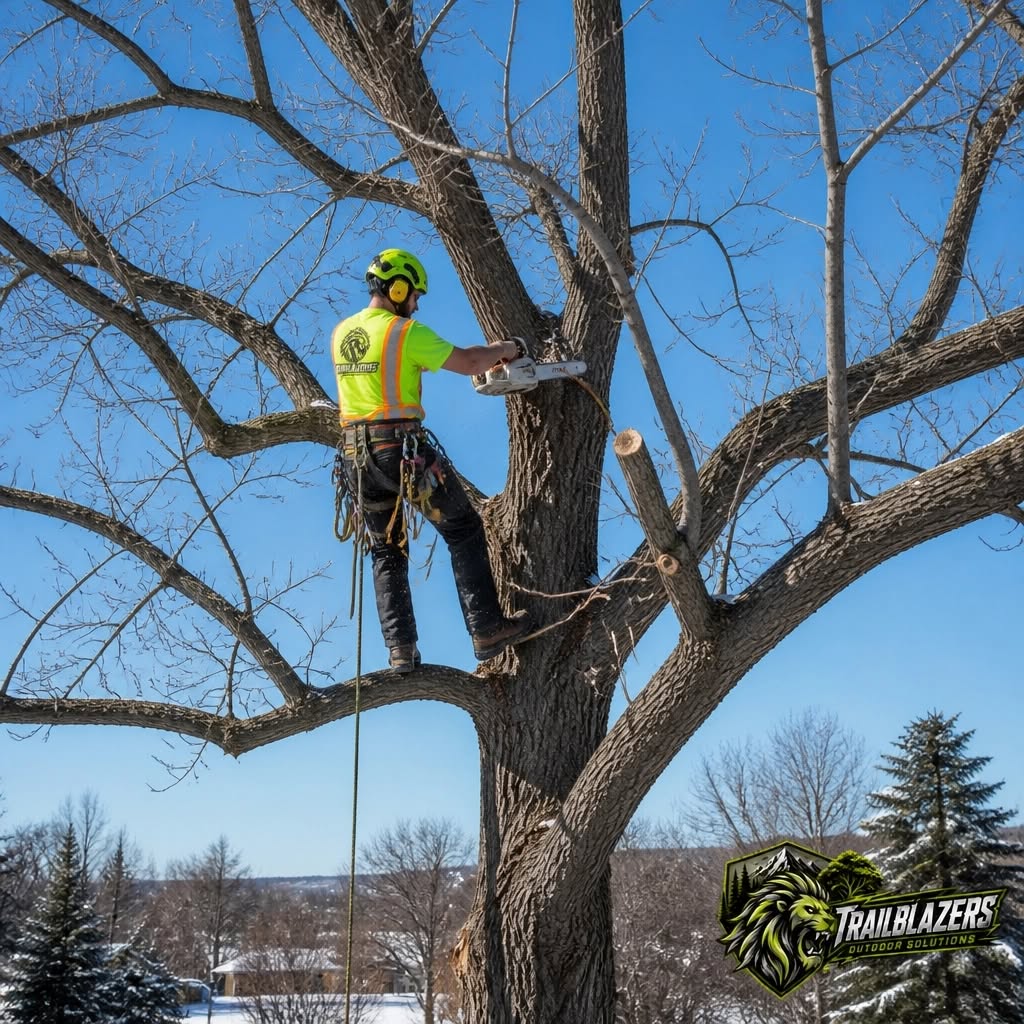
Good Pruning Is an Investment. Bad Pruning Is Permanent.
There's a right way and a wrong way to cut a tree — and the difference shows for years. Done well, pruning improves a tree's health, structure, safety, and appearance. Done wrong, it invites decay, weak regrowth, and new hazards. We do it right, every cut.
- Pruned to ANSI A300 — the industry standard for tree care
- Proper cuts that heal cleanly — we never top trees
- For health, safety, structure, and curb appeal
- Residential and commercial properties
The Right Cut for Every Goal.
Pruning isn't one-size-fits-all. We match the technique to your tree, your property, and what you want to achieve.
Crown Thinning
Selective branch removal that improves light, airflow, and reduces wind load — without changing the tree's natural shape.
Crown Raising
Lifting the lower canopy for clearance over walkways, driveways, lawns, and sightlines.
Crown Reduction
Reducing height or spread the right way — with proper cuts back to lateral branches. Never topping.
Deadwooding
Removing dead, dying, or broken limbs before they fall — for a safer, cleaner, healthier canopy.
Structural Pruning
Training young and maturing trees to grow strong, balanced, and problem-free for decades to come.
Storm-Proofing & Clearance
Weight reduction and clearance from roofs, siding, and chimneys to help trees stand up to Wisconsin weather.
It might be the most important thing on this page.
"Topping" — hacking a tree down to stubs — is one of the most damaging things you can do to a tree. It triggers weak, fast-growing regrowth, opens the trunk to decay and disease, and creates bigger hazards down the road. Some companies do it because it's fast and cheap.
We don't. When a tree needs to be smaller, we use proper crown reduction — cutting back to healthy lateral branches so the tree stays strong, safe, and natural-looking. It's the difference between a quick job and the right one.
Is It Time to Prune? Look for These.
If any of these sound familiar, your trees would benefit from a professional pruning:
- Branches hanging over the roof, driveway, or sidewalk
- Dead, broken, or hanging limbs in the canopy
- Branches rubbing or crossing each other
- A dense, overgrown canopy blocking light or air
- Limbs growing toward the house or near power lines
- It's been years since the tree was last pruned
- You want to prep for storm season — or fruit trees that have gotten unruly

When's the Best Time to Prune?
For most trees, late winter to early spring — while they're dormant — is ideal: cuts heal fast and the structure is easy to read. But hazards don't wait for a season, and neither should you.
Dormant Season
Late winter to early spring is best for most species — strong healing and clear structure for shaping and thinning.
Anytime
Dead, broken, diseased, or hazardous limbs can — and should — come off any time of year. Don't wait on those.
After Storms
Storm-damaged trees need attention right away. Call us — we'll make it safe first, then plan the rest.
Simple, Clean, Done Right.
Assessment & Plan
We look at the tree's health, structure, and your goals, then give you a clear, written quote up front.
Pruned to Standard
Proper cuts at the right points, the right amount removed — to ANSI A300. No topping, no over-thinning.
Cleaned & Hauled
Every branch chipped or hauled away. We leave your property spotless and your trees looking their best.
More Ways We Keep Your Property Sharp.
Trimming & Pruning, Answered.
It depends on the species, age, and goal. Many mature shade trees do well on a 3–5 year cycle, while young trees and fruit trees benefit from more frequent attention to build good structure. Dead or hazardous limbs should be removed as soon as you notice them. We'll recommend a schedule that fits your trees.
For most trees, late winter to early spring while they're dormant is ideal — cuts heal quickly and structure is easy to see. That said, dead, broken, or hazardous limbs can and should be removed any time of year, and storm damage shouldn't wait.
No — and we'd gently steer you away from anyone who does. Topping damages trees, triggers weak regrowth, and creates future hazards. When a tree needs to be smaller, we use proper crown reduction so it stays healthy, safe, and natural-looking.
Proper pruning helps trees — it improves health, structure, and safety. The key is technique and restraint: we remove only what's needed, make clean cuts in the right places, and follow ANSI A300 standards so your tree heals well.
It depends on the size and number of trees, the access, and how much work each one needs. We give free, written estimates up front, so you'll know the full price before any work begins.
We can handle clearance pruning around your home and the service line running to it, where it's safe and permitted. The main utility lines along the street are the utility company's responsibility — but we're glad to take a look and point you in the right direction.
Let's Get Your Trees Healthy, Safe, and Sharp.
Book a free estimate and we'll put together a pruning plan that's right for your trees — no upselling, no guesswork.
Prefer to talk? Call or text (715) 222-8730